Fresh paint can make a classic look convincing. It cannot tell you whether a quarter panel contains carefully fitted steel or a thick layer of filler covering unresolved damage. That difference may become apparent only after the vehicle sees road vibration and changing seasons.
For buyers comparing restoration shops, some of the strongest evidence comes before primer. Look at how the shop finds rust, restores the panel’s shape, and joins the metal. Those decisions establish the foundation for everything you see afterward.
Rust repair starts beyond the paint bubble
A paint bubble marks a place to investigate, not the boundary of the repair. Corrosion can spread between overlapping panels and inside enclosed sections while the exterior still looks reasonably intact.
Surface oxidation may be treatable when the steel beneath it remains sound. Perforated or badly thinned metal needs replacement, with the repair extending to sound steel. A new outer skin does not solve rust left in the reinforcement behind it.
Location matters as much as appearance. Rust around a truck’s cab mount can affect how the body sits. On a classic Mustang, damage to a rocker or torque box may involve the structure that carries loads through the body.
Some damage becomes clear only after coatings or outer panels are removed. A credible evaluation separates visible problems from areas that still require investigation. The repair plan also needs to address corrosion protection inside sections that will become inaccessible once assembled.
The metal should carry the shape
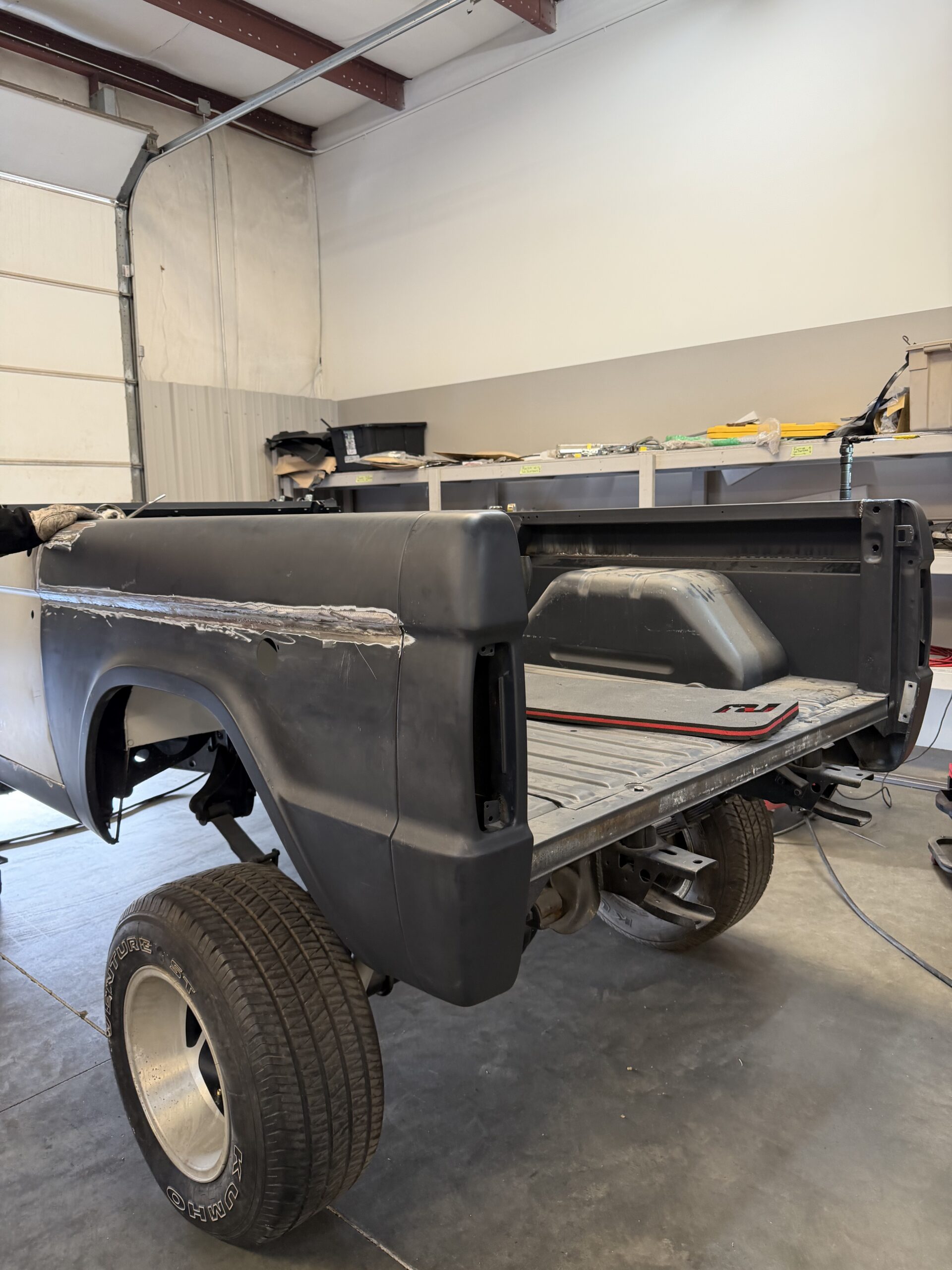
True panel fabrication means forming steel to match the damaged area’s contour and function. A well-made patch follows the surrounding curves and fits its opening without large gaps that make welding more difficult.
Handmade is not automatically better than a reproduction panel. A replacement quarter panel may be the right choice for extensive damage. It still requires careful fitting, and it may need reshaping to align with the particular body.
The useful distinction is whether the steel establishes the panel’s shape before finishing materials go on. Filler can refine a sound repair. It cannot restore the strength of rusted steel or hold a poorly fitted patch together.
A thin finishing layer of body filler is normal in quality refinishing. Using heavy filler to create a missing contour or disguise distortion is a different matter. Excessive buildup over unstable metal is more vulnerable to cracking as the body moves.
Panel gaps tell only part of the story
A narrow door gap can catch your eye, but width alone does not prove good fitment. Look along the body: adjoining panels should sit at the intended height, and body lines should meet cleanly across their edges.
Factory gaps varied. The goal is consistent fit appropriate to the vehicle, with enough clearance for normal operation, rather than the tightest possible opening.
That fit gets established before final paint. A door should open without catching an adjacent panel. Trim and weatherstripping belong in mockup because they can reveal fit problems that bare panels alone do not show.
For extensive structural repairs, ask how the shell will be supported and measured while metal is removed. Bracing where appropriate helps keep openings from changing shape during the work.
Sound welds matter more than shiny welds
A neat weld is useful evidence, but appearance alone does not prove strength. Proper fusion means the pieces of steel actually bond. Grinding a weak joint smooth does not improve that bond.
The joint also has to suit the location. Butt joints may be appropriate for outer-panel patches, while plug welds commonly recreate factory spot-welded connections at flanges. Different parts of the body call for different repair methods.
Thin sheet metal distorts easily under welding heat. Controlled welding limits the pulling and shrinking that can leave a panel wavy. Careful grinding matters, too: dressing a weld should not leave the surrounding steel excessively thin.
Ask how the back of the repair will be protected. Bare steel hidden behind a beautiful exterior can become the starting point for another rust problem.
Ask to see the work before it disappears
A finished-car gallery shows appearance. Repair-stage documentation helps explain what supports it. When comparing shops, ask for:
- Photos showing exposed rust and any affected inner structure.
- Examples of replacement sections fitted and welded before filler or primer.
- An explanation of why a patch or full-panel replacement suited the damage.
- A clear process for discussing newly discovered rust and approving changes to the work.
Photos cannot verify every weld, but they can reveal whether damaged metal was removed and how the repair was built. A shop’s explanation should make the decisions understandable, not mysterious.
Cracks and waves can emerge when the underlying repair moves or finishing materials shrink. Trapped corrosion and poor preparation can lead to bubbling or loss of paint adhesion. Sound metalwork reduces those risks before the finish ever goes on.
If you are comparing shops for a classic car or truck restoration, talk with us at Classic & Custom Restorations about the metalwork your project may require. From our shop in Dallas, Georgia, we handle rust repair and metal fabrication for restoration projects from across the country.